Sunday, March 8, 2009

3a World Cities

  1. Contains a title using the format listed above .25 points 3a World Cities: San Francisco News and New York News
  2. Contains a web link to your locations. (eg you can use the tools in your blog where you paste your work; there is a little icon that looks like a link) .25 points SF Gate, NY Daily News
  3. Contains an explanation regarding how this component (any aspect of it; eg content of videos, content of websites) connects to your study of humanities. .25 point The study of humanities explains that it is understanding and appreciating a variety of cultural expressions. The two cultures between New York City and San Francisco City are obviously very different, which is apparent when searching for news in the two cities. From the front page of both news stories, it is apparent that New York seems to be more sports based culture. Two of the top stories have to do with "A-Rod's" surgery, and Anna Kournikova. Also on the NY front page is "Sexy outfits only stars can pull off" and Rhianna's latest Chris Brown scandal. As a city very popular for the entertainment industry, they sure are showing it. As for the SF page, the three top stories projected are an earthquake that has just hit San Jose and Sonoma County, a "Mormons Private Welfare System" and "Pastor Killed, two hurt at Illinois Church". Based on these headlines, it would seem as SF is a very religious area. Is this the part of our culture that we are projecting into the U.S?
  4. Contains the following elements that will be used in upcoming projects for analytical purposes:
  1. What are some assumptions/stereotypes you think people have of each location: 1 point I think these two cities hold many stereotypes, some the same, some different. Both are very big U.S cities, so it is a stereotype that these cities are "always moving" and always very busy and packed with people. When people think of San Francisco, I think a common stereotype to think of is gay people and Asians. When people think of New York, a common stereotype could be mean people and Broadway. All of these stereotypes are actually a very important part of each cities culture, weather they be true or not.
  2. List 3 things that make each location similar: 1 point Both sites are very apparent in their reporting of crimes. On the SF news, a new massive sweep of the Bay Area apparently caught 42 gang members. In the NY news, a teenager who was trying to defend a friend who was being bullied and beat up, had an apparent heart condition that caused him to collapse and later die. Second, both cities are known for containing a lot of people, and the theater district is very apparent in both cities. Thirdly, both cities are almost a "model city" for other cities around the world. Many new trends are started in both of these cities and picked up by other around the U.S and globe.
  3. List 3 things that make each location so different: 1 point One difference I noticed was when I clicked on the "news" button for each website. While San Francisco's news mentioned something about Pres. Obama three stories down, on NY's website Obama wasn't mentioned until the 10th story on the list. Another difference is that in San Francisco News, Prop 8 seems to be everywhere still. But in NY, I couldn't find one single thing on the front page pertaining to people still fighting for Prop 8. Also, the weather is another difference between these two cities. In San Francisco, it is mostly sunny but can get cold and overcast during winter. In New York, it is colder more year round, but gets very hot and clammy during summer. New York's website seems to have much more "gossip" news about celebrities, while SF is more focused on political stories.
  4. Questioning: What else would you like to know about these places? When completing the question section, lead your audience into the question by stating a fact you do know, yet you still have the related question. This way, both your audience and you will have an educational experience. .5 point I do know that from what I have learned in the previous section, San Francisco seems to be paying more attention to the recent changes in the political system. I wonder if California is more politically obsessed and involved than New York is.

5. Using your classmates work from last week, tell us one thing you learned from 1 student. Is this one thing some common experience you share or some experience that is completely different than what you experienced? Is this one thing related to our class theoretical foundation and if so, how? Is that one thing related to historical or cultural context of this country or a different one? Link that persons blog to this entry (eg cut paste that blog entry here) . .5 point

I learned from Sierra that there are 40 different kinds of grapes. This is pretty different from what I have experienced in my homework for this class, although pretty common in what I have experienced living here. I have lived in Sonoma County since I was two, so I am very used to driving by vineyards as well, but have always wanted to learn more about them. It is related to our historical and cultural context because wine is a very big part of Sonoma County, and California. It helps bring a lot of money into our economy and helps create a lot of jobs for people in the area. Sierra's blog

Friday, February 27, 2009

2c Bay Area

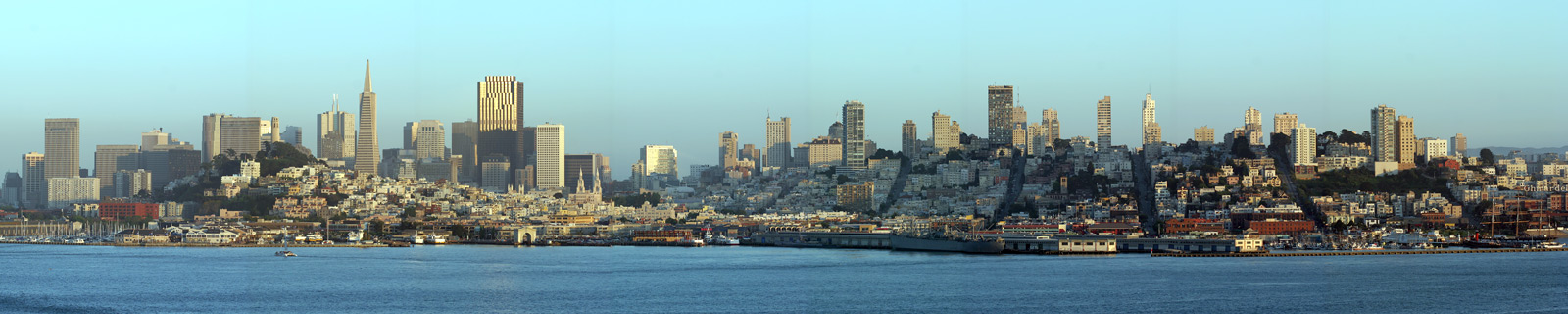
2c San Francisco Bay or the "Bay Area"

  1. Contains a brief paragraph how it connects to your study of humanities. 1 point The Bay area has a culture of it's own. It is very different from the Southern California culture, for instance, and we do things a little bit differently here. We are known for own wine in Napa Valley, and some specific art, with is very important in the study of humanities. Learning about differnent cultures within California gives you a greater understanding of the state itself and what to expect of culture of other states as well.
  2. Contains the following "analytical elements":
  1. Observation: What did you choose? What do you see or hear or feel or think of in the choice you made? What is the subject of the work? If you chose a 'thing' what is the work made of and what techniques (colors, lines, shapes, textures)does the creator use? Be specific in your description. If you chose a place, be specific in your description of what you see or hear. Talk to your reader as though they cannot see the item but somehow must draw a painting of what you see or hear. 1 point I chose to do the Bay Area for this topic. When I think of the Bay Area, the literal interpretation of "bay" comes to mind, and therefore so does a big body of water. When referring to "the bay" most people think of the San Francisco Bay, but it also incorporates other counties as well. San Francisco, San Jose, and Oakland are some major cities embodied in the Bay, but counties like Alameda, Contra Costa, Marin, Napa, Sonoma, Solano, Santa Clara, San Mateo are also included in this phrase. I think of things from rolling hills to tall skyskrapers, airports to famous bridges (Golden Gate) oceans to rivers. It seems as though we've got it all in the Bay area. Big cities, the beach, rivers, and lakes make it so there's a lot of things to choose from for fun. We are also very well known for a big contribution to rap music - some big artists such as Mistah Fab, Too Short, E40, and Andre Nickatina all originated from the Bay Area, and often write about it in their lyrics (evident because when I typed "Bay Area" into YouTube, all I got was these artists' music videos.)
  2. Interpretation: What is your choice about? Give specific examples to support this statement in 2 sentences; do so in a way that teaches us something about your choice. Make Paulo Freire proud! .75 point This choice is about a culture of it's own. We are very lucky to have the things we want and need so close to home. We have one of the best JC's around the world - Santa Rosa JC, right here in our home town. Another good university closeby is Sonoma State University, also in the top ranked colleges. Although this contributes to a lot of students not moving far from home, a good education, no matter its whereabouts, is always important.
  3. Judgment: What led you to your choice? What do you think or feel about this choice? Why do you feel this way? Support your thoughts with specific observations. .5 point I chose to do the Bay Area simply because after moving to San Diego for a semester, I realized just how lucky we are. After moving back home to Petaluma, I realized we really are in the perfect location, all the things I love to do (wakeboarding, going to the beach, shopping, partying) are all within a 45 min radius of my hometown. As boring as some people say Petaluma/ Sonoma County can be, I look at it in a different light since now I have experienced other places. We really are lucky to live in such a beautiful place.
  4. Questioning: What else would you like to know about this choice? When completing the question section, lead your audience into the question by stating a fact you do know, yet you still have the related question. This way, both your audience and you will have an educational experience. Example: I learned that John Steinbeck's Grapes of Wrath was based on his personal experience working with farm workers. I would like to know if the characters he used in that book are fictitious or are they people he met? .5 point I learned that the demographics in the county are very widespread- around 60% is white, but almost 20% is Asian, and another 20% Hispanic of any sort. I wonder what led to this population of diversity and what it is that attracts so many immigrants to this area.

5. Using your classmates work from last week, tell us one thing you learned from 1 student. Is this one thing some common experience you share or some experience that is completely different than what you experienced? Is this one thing related to our class theoretical foundation and if so, how? Is that one thing related to historical or cultural context of this country or a different one? Link that persons blog to this entry (eg cut paste that blog entry here) . .5 point

I learned from Rhianon that the largest art museum in the US is the Los Angelos County Museum of Art. This is somewhat related to my experience since I chose Hollywood for my first topic, and both are located in the Los Angelos County. This is definitely related to our class foundation - art remains to be a huge part in American culture throughout the years, and it is apparent (with such a big museum) that we are dedicated to making sure art is available to see through the publics eyes. LINK:http://rhianonlarson.blogspot.com/2009/02/2b-los-angeles-county-museum-of-art.html


OTHER LINKS:

http://en.wikipedia.org/wiki/Culture_of_California

http://en.wikipedia.org/wiki/File:SFDowntownPanoramaFromAlcatraz.jpg

http://en.wikipedia.org/wiki/Bay_Area

http://en.wikipedia.org/wiki/Napa_County,_California

http://www.youtube.com/results?search_query=The+Bay+Area&page=1

Friday, February 20, 2009

2b Exploratorium

  1. Contains a title using the format listed above .25 points
  2. Contains the sources you used with links to these sources .25 points
  3. Contains a brief paragraph how it connects to your study of humanities. 1 point
The Exploratorium is a science museum dedicated to the teaching of science through hands on activities and experiences. Culture as well, can be taught through hands on activites and seeing first hand what you have been learning as you grow up. That's why museums containing art can teach a lot about the culture it's contained in. Science and the dedication to science discoveries is a very important aspect of American culture, and we are very proud of it. I think that the hands on aspect is also very important to how we as a culture think we should be teaching children. Is this "hands on" experience working?
  1. Contains the following "analytical elements":
  1. Observation: What did you choose? What do you see or hear or feel or think of in the choice you made? What is the subject of the work? If you chose a 'thing' what is the work made of and what techniques (colors, lines, shapes, textures)does the creator use? Be specific in your description. If you chose a place, be specific in your description of what you see or hear. Talk to your reader as though they cannot see the item but somehow must draw a painting of what you see or hear. 1 point
I chose the Exploratorium in San Francisco because I personally am a very "hands on" learner, and I remember going to this museum when I was little. The Exploratorium is in a huge, dome shaped building (also known as the Palace of Fine Arts) located right off the first exit in SF. Once you enter the dome, there is an abundance of activities for you to choose to learn from. For instance, outside the museum there is "Wave Organ" where spectators choose different posts to stand inside and then hear different sonic sounds coming off San Francisco Bay. Or there is the "Tactile Dome" which is a 3D pitch black dome which users must navigate through using their sense of touch. As you make your way through the different levels and areas of this museum, you are met face to face with experiments that test what you know, and teach you what you don't.

b. Interpretation:
What is your choice about? Give specific examples to support this statement in 2 sentences; do so in a way that teaches us something about your choice. Make Paulo Freire proud! .75 point
This choice is about learning. I feel that the Exploratorium teaches children in a way that most regular museums don't - and we need more museums with hands on experiences. Friere would have LOVED to see this museum and all the opportunites it presents for kids. Actually seeing the things that you learn about in school in action is a very exciting experience for a child who is trying to put the world together.


c. Judgment:
What led you to your choice? What do you think or feel about this choice? Why do you feel this way? Support your thoughts with specific observations. .5 point
I chose to explore the Exploratorium simply because I remember going there as a kid, and I remember being enthralled with the sorts of things that I learned there. It makes learning fun, and that is something that a lot of teachers have trouble with when teaching children. When you are young, if something isn't interesting to you or isn't made fun, you are more likely to forget about it 5 minutes later. This makes an experience that lasts for a lifetime, and I still remember some of the things that I learned inside that great big dome.


d. Questioning:
What else would you like to know about this choice? When completing the question section, lead your audience into the question by stating a fact you do know, yet you still have the related question. This way, both your audience and you will have an educational experience. Example: I learned that John Steinbeck's Grapes of Wrath was based on his personal experience working with farm workers. I would like to know if the characters he used in that book are fictitious or are they people he met? .5 point
I learned that the museum was created by a physicist by the name of Dr. Frank Oppenheimer, but I wonder if he personally was the one who created all the different stations from which you learn from. There are so many different types of activites to do, each teaching you something different, and it's amazing that one single mind could have thought up all those different things.

5. Using your classmates work from last week, tell us one thing you learned from 1 student. Is this one thing some common experience you share or some experience that is completely different than what you experienced? Is this one thing related to our class theoretical foundation and if so, how? Is that one thing related to historical or cultural context of this country or a different one? Link that persons blog to this entry (eg cut paste that blog entry here) . .5 point

I learned from Megan that the Golden Gate Bridge is 8,981 feet long. This is a very different experience as my own, since I chose Hollywood for my place to explore in assignment 2a. It is somewhat linked to the historical and cultural context of this country because the Golden Gate has a very big influence on people all around the country. People in CA and close to SF have the opportunity to see it first hand numerous times - others travel across many states to maybe get a glimpse of this miraculous, huge tower!

Megans blog: http://megan-human7.blogspot.com/2009/02/assignment-2a.html


Sources:

http://en.wikipedia.org/wiki/Culture_of_California#Museums

http://en.wikipedia.org/wiki/Exploratorium

http://www.youtube.com/watch?v=7VCmwKqGICI&NR=1

http://www.youtube.com/watch?v=T8Vvlpsx6DU&NR=1

http://en.wikipedia.org/wiki/Wave_Organ

Thursday, February 12, 2009

2a Hollywood

  1. Contains a title using the format listed above .25 points
  2. Contains the sources you used with links to these sources .25 points
  3. Contains a brief paragraph how it connects to your study of humanities. 1 point
Hollywood is associated with a very important aspect of American culture - movies. Hollywood is said to be the "cinema of the United States", as many movies made in America are made in the city of Hollywood (extending out to Burbank and Westside LA as well). Hollywood is a culture of it's own, and often referred to as "Tinseltown" because of it's fake and "glamorous, glittery" lifestyle. The study of humanities is the study of different aspects of culture around the world, and movies are a very important aspect of our American culture.
  1. Contains the following "analytical elements":
  1. Observation: What did you choose? What do you see or hear or feel or think of in the choice you made? What is the subject of the work? If you chose a 'thing' what is the work made of and what techniques (colors, lines, shapes, textures)does the creator use? Be specific in your description. If you chose a place, be specific in your description of what you see or hear. Talk to your reader as though they cannot see the item but somehow must draw a painting of what you see or hear. 1 point
  2. Interpretation: What is your choice about? Give specific examples to support this statement in 2 sentences; do so in a way that teaches us something about your choice. Make Paulo Freire proud! .75 point
  3. Judgment: What led you to your choice? What do you think or feel about this choice? Why do you feel this way? Support your thoughts with specific observations. .5 point
  4. Questioning: What else would you like to know about this choice? When completing the question section, lead your audience into the question by stating a fact you do know, yet you still have the related question. This way, both your audience and you will have an educational experience. Example: I learned that John Steinbeck's Grapes of Wrath was based on his personal experience working with farm workers. I would like to know if the characters he used in that book are fictitious or are they people he met? .5 point
I chose Hollywood, because when I think of Hollywood, I think of what other people refer to as the "typical" American. In Hollywood, the weather is always sunny and nice, people are seen cruising in convertibles with the top down, and everybody is tan and blonde. The beach is nearby, and you have the power to freely choose whatever you want to do for the day. Palm trees line the pavement streets, and walking down Melrose Ave you see some of the worlds most famous footprints and handprints, and become excited that just walking down the street you might see a celebrity. Looking up and over the buildings, you see the infamous "HOLLYWOOD" sign, resting on the Hollywood hills. At least this is how Hollywood is portrayed in the media. This choice is about the stereotypes that come from people oversees. Hollywood is so widely portrayed, that foreigers think that all of America looks like it does in Hollywood. But that is not so, and only traveling to America itself will you see there are much more diverse cities than Hollywood. I chose Hollywood because growing up, I had always wanted to be an actress. I dreamed of being in movies, and moving to LA when I was a teenager to pursue an acting career. During a trip to southern California to look at colleges with my family, we drove through Hollywood to take a quick peek. It was NOTHING as I expected. I was absolutely appalled - the glamorous lifestyle once seen on TV was actually just a run down, scary, ghetto town, and not all that I thought it was. Special in it's own way, of course, but no where I wanted to live. Upon visiting other places around the U.S, I saw many more places that I think stood more for America. I learend that Hollywood was not always the glamourous lifestyle back in the day - in fact in 1853, one adobe hut stood tall called "Hollywood". I wonder how many years it took for it to flourish into the modern Hollywood lifestyle that we know today.

5. Using your classmates work from last week, tell us one thing you learned from 1 student. Is this one thing some common experience you share or some experience that is completely different than what you experienced? Is this one thing related to our class theoretical foundation and if so, how? Is that one thing related to historical or cultural context of this country or a different one? Link that persons blog to this entry (eg cut paste that blog entry here) . .5 point

I agree with Anthony that Friere probably wouldn't have had such an impact if he hadn't gone to Law school. Friere going to law school opened his mind about a variety of different things, and made him experience a different way of life, which is very important to the principals he teaches. Having different experiences and trying new and different things opens your mind to different cultures and ways of doing things, which is exactly what this class is about.

http://amusettihuman7.blogspot.com/2009/01/1b.html


LINKS:

http://en.wikipedia.org/wiki/Culture_of_California

http://en.wikipedia.org/wiki/Hollywood

http://en.wikipedia.org/wiki/Cinema_of_the_United_States

http://en.wikipedia.org/wiki/Hollywood_Walk_of_Fame

Monday, January 26, 2009

Assignment 1c

I read Katherine's (but she goes by Katy) blog and she has two kids, 8 months and another 8 year old! :) She describes in the Freire assignment that Paulo worked with repressed, poor, illiterate people until he was thrown in jail in 1964 in Bolivia. Freire also wrote a book that sold over 750,000 copies, called Pedagogy of the Oppressed. The second blog I looked at was Anthony's. He thinks of California as a very liberal place, and lives 16.78 miles away from the SRJC campus. He then describes how Paulo Freire stressed dialogue in popular and informal in education. One term he Freire commonly used was "praxis" which is an action that is informed and linked to certain values. This information will help in our Humanities class because his ideals are a basis of what we will be learning about: studying other cultures and how their cultures differs from our own, which is exactly what Freire aimed to do. It also points out that education is a big player in any culture and humanity.

Thursday, January 22, 2009

Assignment 1b

Paulo Freire was one of the most influential thinkers of the late 20th century. His ideas have been used throughout time and are still used today, such as in this class! Some of his main ideas and facts about him are as described below:

Since Paulo was raised and became familiar with poverty and hunger at a young age, he was always dedicated to helping those who aren’t as fortunate as we are. He was a believer in a term called liberation theology, which emphasizes the Christian mission to bring justice to the poor and oppressed, often through political activism. He did this by starting a few teaching careers in his native country, and then continued to travel all around the world. He was also offered a position to be a professor at Harvard University.

He also believed that the public education system was corrupted, and not useful. So he worked to reform the system so it worked in ways to teach better. A term called “banking education” describes how learners can have pre-selected knowledge deposited in their brains, and it’s the teacher’s job to fill the open space.

Another term I believe says a lot about Freire is “culture of silence”. This is where dominated individuals lose the means by which they critically respond to the culture that is forced on them by a dominant culture. In other words, it’s the way minorities and people of less power/money respond to being taught by the dominant culture. It is the culture of people that are silenced by the dominant culture. Freire made a point to help out these individuals who were “silenced” and made sure their opinions were voiced and heard by others.

LINKS USED FOR RESEARCH:

http://en.wikipedia.org/wiki/Paulo_Freire

http://www.education.miami.edu/ep/contemporaryed/Paulo_Freire/paulo_freire.html

Wednesday, January 21, 2009

Assignment 1a

1. What is your first name only (NOT last name): Miranda
2. Why are you taking this class and what do you hope to learn: I am taking this class for a few reasons. One, it is required for transfer and my GE. Two, I took Humanities 6 two semesters ago and really enjoyed it, and I was hoping to just gain more knowledge on the topic. I hope to learn about all sorts of new and interesting things!
3. How far do you live from SRJC main campus (go to google, maps to get the SPECIFIC answer; for this you type in your address and 1501 Mendocino Ave, Santa Rosa, CA to find the exact mileage. EXAMPLE: 2.6 miles from campus. The goal here is to use new tools available to us. You can always come back to edit this): I live18.3 miles away from the main campus, although I do live about 5 min away from the Petaluma campus ;)
4. What do you think of when you think "California"? Does this differ from what non-Californians think and if so, how? When I think of California, I think of sunny beaches, green mountains, and lots of tan people. This is also very stereotypical. I think non-Californians probably have the same view because those are all very big stereotypes about Cali.
5. Have you created a blog or webpage in the past? No, but I do have Myspace and Facebook
6. Regarding computers, are you on a mac or a pc? PC
7. What was your January 20th, 2009 like, or what do you remember of this day? I got up VERY early (I'm a late sleeper) and watched the President's Inaugeration, which was actually very exciting for me, since I voted for Mr. Barack Obama!