Sunday, April 12, 2009
4b Reflection of My California
1. I chose to compare and contrast my ideas and thoughts with Katherine. We both read the same stories and had either similarities are differences in opinion. In the (4th) paragraph Katherine talks about home being " a home away from home". Sometimes you live in such a beautiful place you can almost escape reality and believe you are somewhere else. Katherine and I both seemed to believe that this was the main point the writer was trying to make. Places in your own backyard can become beautiful if you let them. Also, like Katherine, I was really surprised to discover all the different ethnicity and cultures that make Sacramento so diverse. 75,000 Russians live in Sacramento? My father commutes there every day and I was never aware of that fact until now.
2. Elisabeth Laxton wrote about the story by Tobar. This was different than the stories I had read because the writer had a fascination with something oddly strange - California freeways. Most of the stories I read were filled with descriptions of rivers, canyons, vineyards, farms. But strangely this writer was much more intrigured by man made, mechanical things. The writer appreciated the roads in CA because after traveling abroad, realized other countries freeway systems had no etiquette or proper rules. The next story Liz presented was by John Steinbeck. Steinbeck seems to believe that there are "myths" within California, the myth of nostalgia. It seems as if everyone has this dream or belief about what California is, and many are disappointed when they actually see what it's like. Lastly, Liz discussed Humes story. Humes lived and described Seal Beach, located in Souther California. I found it interested that apparently the city and area is slowly transforming into commercial development, due to money issues.
3. I chose to find something interesting about the stories that Lori read. Dumas wrote a piece about moving for the 8th time - this in itself, was different from the stories I read. The writers I had had grown up in the area, and described it as they knew it like the palm of their hand. This account was different - everything was new to the writer. Rules for everything? That doesn't sound like a fun way to live. It is apparent that this lifestyle was very different from those being described by others in the book. Major's story and Lori's description of the story sent me into sensory overload with reminders of Santa Cruz Beach Boardwalk. It sounds like we had similar memories of the games, rides, and funhouses. The last story by Chabon describes Berkeley, which was very interesting to me because I myself have never been there. I've always wanted to visit, even now more intrigued by the writers desciption of "And all of the things that drive me crazy are the very things that make this town worth knowing, worth putting up with, worth loving and working to preserve." Very intersesting.

Monday, March 30, 2009
3c Inland Areas

- Contains a title using the format listed above .25 points Reno News and Las Vegas News
- Contains a web link to your locations. (eg you can use the tools in your blog where you paste your work; there is a little icon that looks like a link) .25 points Reno, Las Vegas
- Contains an explanation regarding how this component (any aspect of it; eg content of videos, content of websites) connects to your study of humanities. .25 point One article on the Reno News website described how a group of students from Austria began a two-week stay at Truckee Meadows. Their perceptions and first impressions were that they were impressed with how large the city they were staying in was, and they were glad that teachers are a lot more laid back and don't "yell at students". They also describe how the classrooms are more personal, and each teacher has their own room. (In Austria, they have multiple teachers that move from class to class.) On the downside, the students reported that classes here were much easier - they were used to the rigorous schedule of 15 subjects per year. Here in the USA, we seem to only take about half that. The students were also happy with how many radio/television channels there are to choose from, many more fast food restaurants, and nice and open people everywhere. This relates directly to the study of humanities because it relates to how other people view our culture, and how their first-hand first-time experience with our culture went. The students seemed to be very pleased with our cultural differences from their own, apparently people from Austria aren't very nice!
- Contains the following elements that will be used in upcoming projects for analytical purposes:
- What are some assumptions/stereotypes you think people have of each location: 1 point Many people hold the stereotype that there is nothing very exciting going on in Reno. People expect that they get a lot of snow during winter, as Reno is a popular spot near Tahoe, very well known for good skiing/snowboarding. Las Vegas, on the other hand, is very well known for their exciting, fast paced, party hardy lifestyle. Showgirls come to mind - and I think it's a common stereotype that any girl in Las Vegas looks like a showgirl. People also assume that Las Vegas is the ultimate party scene. Many people travel here for their 21st birthday to have a good time.
- List 3 things that make each location similar: 1 point 1. Both cities, are obviously inland cities, and therefore can't really rely on going to the beach to keep people occupied. 2. I came across something called the Red District Arts Show, in Reno. It seemed that the lifestyle of this event was very simliar to Las Vegas lifestyle. The event was described as a "night of risque fashion and body paint, and an afterparty with the Black Rock City Allstars".
3. Both cities appeared to be very interested in sports on their websites. The Reno News had a story about the Reno Aces, their local baseball team. Las Vegas had some featured articles about the NCAA tournament.
- List 3 things that make each location so different: 1 point 1. Like previously said, Las Vegas is known for a very high paced lifestyle, while Reno is known for a more laid back, slow paced one. 2. The Reno news seems to be a lot less occupied with news about celebrities. Las Vegas on the other hand, had a lot of information about Hollywoods latest scandals. 3. Reno is known for getting a lot of snow during winter, but Las Vegas on the other hand gets cold, but never really gets snow in winter.
- Questioning: What else would you like to know about these places? When completing the question section, lead your audience into the question by stating a fact you do know, yet you still have the related question. This way, both your audience and you will have an educational experience. .5 point I know that both of these locations are very well known for being "touristy" spots, but I wonder what each place specifically has to offer to people of all age groups.
5. Using your classmates work from last week, tell us one thing you learned from 1 student. Is this one thing some common experience you share or some experience that is completely different than what you experienced? Is this one thing related to our class theoretical foundation and if so, how? Is that one thing related to historical or cultural context of this country or a different one? Link that persons blog to this entry (eg cut paste that blog entry here) . .5 point In Maria's blogger, I learned that La Jolla beach has a swimming area specifically for kids that is partially protected by a seawall. This relates to what I was talking about in my blog last week - the safety of kids in comparing North CA and South CA beaches. It seems as if the Southern Beaches provide a lot more safety for kids, and I wonder if Norcal beaches could ever do something alike "The Casa" to keep kids safe from the oceans waves. Maria's Blog
Friday, March 13, 2009
3b Beaches
- Contains a title using the format listed above .25 points: 3b Beaches
- Contains a web link to your locations. (eg you can use the tools in your blog where you paste your work; there is a little icon that looks like a link) .25 points Half Moon Bay News, Ocean Beach News
- Contains an explanation regarding how this component (any aspect of it; eg content of videos, content of websites) connects to your study of humanities. .25 point: What do you think of when you think of the typical Californian lifestyle? Or have you ever seen one of those commercials promoting to come to California? It is commonly seen that the beach is a big part of our Californian culture. Being the "lazy bums" we are, all we do all day long is sit on the beach, get tan, and surf. Of course, this is a common stereotype that is true to only 5% of Californians. Although it's safe to say many of us do love to visit the beach every once in awhile, we do not spend the majority of our time there being lazy. But still, it is perceived in other places that part of our culture is being a beach bum. I also believe this is one of the reasons California is so often envied. Going back to the "California" commercial, the people in the commercial keep talking about how everyone thinks life in CA is one big vacation. The actress then says "It's really a lot of work." We get up early, it's a long drive to the office, we have board meetings (physically showing a surfer on a surf board), LOTS of board meetings. The irony of this commercial is that all these actors are saying how "hard" work here is, but yet they're being shown doing the things that they love - riding bicycles, surfing, mountain climbing, basically playing around. WE are the ones who are putting out the "lazy" stereotype that others perceive us as, via commercials like this! (See the commercial here)
- Contains the following elements that will be used in upcoming projects for analytical purposes:
- What are some assumptions/stereotypes you think people have of each location: 1 point: I think the paragraph before this goes into more detail, but to sum it up - people from out of state have the assumption/stereotype that we are Californians are just "beach bums" all day. Ocean Beach is located in San Diego, CA, so many people assume that the weather is always sunny and hot, there are always tons of people there, and the surf is amazing. All of these things could be true. Half Moon Bay Beach, which is located near San Francisco, probably has the same rep, because people think all beaches in California are typically the same.
- List 3 things that make each location similar: 1 point 1. Both locations are prime spots for surfers. Even the Ocean Beach website says that "locals equate OB with surfing". And Half Moon Bay (besides maybe Salmon Creek) is one of the most sought out surfing spots in Northern California. 2. Both locations are obviously, in California. 3. Both locations have many spots near them for hotels and resorts, making them both a prime tourist destination. Ocean Beach has Ocean Beach Hotel and Ocean Villa Inn nearby, and Half Moon Bay has the Beach House Hotel and Half Moon Bay Inn.
- List 3 things that make each location so different: 1 point 1. I think the weather is the biggest differential factor between these two beaches. In San Diego, the weather is known for being sunny almost year round. On March 13th 2009, the temperature in OB is 63 and sunny. Northern California beaches are known for getting quite cold and windy during most months of the year. On the same date, Half Moon Bay's temperature is 63, but windy and overcast. 2. Uses of the beaches. On Half Moon Bay's website they seem to talk a lot more about salmon, and how the shortage of salmon this season is hurting fisherman. On the OB website, I couldn't find anything about the salmon shortage. This makes me think that Half Moon Bay is a big location for our sources of food, while OB is mainly a "party" beach. 3. Fatality rates. On the HMB website, there is an article regarding the investigation of a surfer who died there. The body was found on Sunday, and although they are not sure how he died it's said the conditions the day he went out were windy and rough. The OB website did not contain anything to anyone who had died recently. It seems as if the big difference between these two beaches are the safety. OB seems to be more kid friendly, the sunny weather and easy going waves helping the situation. But Northern Californian beaches have a bad rep for being very dangerous - growing up here, one of the first things I learned was to never turn your back on the ocean.
- Questioning: What else would you like to know about these places? When completing the question section, lead your audience into the question by stating a fact you do know, yet you still have the related question. This way, both your audience and you will have an educational experience. .5 point: I discussed fatality rates in the differences question above - but I do not know the actual fatalities of each beach individually. I tried looking it up online, but could not find any specifics. I would like to know just how common it is to get pulled out to the dangerous ocean here in Northern CA beaches, and if Southern CA beaches are any safer.
5. Using your classmates work from last week, tell us one thing you learned from 1 student. Is this one thing some common experience you share or some experience that is completely different than what you experienced? Is this one thing related to our class theoretical foundation and if so, how? Is that one thing related to historical or cultural context of this country or a different one? Link that persons blog to this entry (eg cut paste that blog entry here) . .5 point: I learned from Cathy that Rome is also called the "Eternal City". I figure this is because it has such a beautiful history to it and a lot of past that can teach us about our future. This is an experience different from my own - I personally did not review Rome as a city and also have never traveled there myself - learning about this city is a very new experience for me. This is related to the foundation of our class and has a lot of do with the historical and culture context of THEIR country, Europe. Cathy's blog
Sunday, March 8, 2009
3a World Cities
- Contains a title using the format listed above .25 points 3a World Cities: San Francisco News and New York News
- Contains a web link to your locations. (eg you can use the tools in your blog where you paste your work; there is a little icon that looks like a link) .25 points SF Gate, NY Daily News
- Contains an explanation regarding how this component (any aspect of it; eg content of videos, content of websites) connects to your study of humanities. .25 point The study of humanities explains that it is understanding and appreciating a variety of cultural expressions. The two cultures between New York City and San Francisco City are obviously very different, which is apparent when searching for news in the two cities. From the front page of both news stories, it is apparent that New York seems to be more sports based culture. Two of the top stories have to do with "A-Rod's" surgery, and Anna Kournikova. Also on the NY front page is "Sexy outfits only stars can pull off" and Rhianna's latest Chris Brown scandal. As a city very popular for the entertainment industry, they sure are showing it. As for the SF page, the three top stories projected are an earthquake that has just hit San Jose and Sonoma County, a "Mormons Private Welfare System" and "Pastor Killed, two hurt at Illinois Church". Based on these headlines, it would seem as SF is a very religious area. Is this the part of our culture that we are projecting into the U.S?
- Contains the following elements that will be used in upcoming projects for analytical purposes:
- What are some assumptions/stereotypes you think people have of each location: 1 point I think these two cities hold many stereotypes, some the same, some different. Both are very big U.S cities, so it is a stereotype that these cities are "always moving" and always very busy and packed with people. When people think of San Francisco, I think a common stereotype to think of is gay people and Asians. When people think of New York, a common stereotype could be mean people and Broadway. All of these stereotypes are actually a very important part of each cities culture, weather they be true or not.
- List 3 things that make each location similar: 1 point Both sites are very apparent in their reporting of crimes. On the SF news, a new massive sweep of the Bay Area apparently caught 42 gang members. In the NY news, a teenager who was trying to defend a friend who was being bullied and beat up, had an apparent heart condition that caused him to collapse and later die. Second, both cities are known for containing a lot of people, and the theater district is very apparent in both cities. Thirdly, both cities are almost a "model city" for other cities around the world. Many new trends are started in both of these cities and picked up by other around the U.S and globe.
- List 3 things that make each location so different: 1 point One difference I noticed was when I clicked on the "news" button for each website. While San Francisco's news mentioned something about Pres. Obama three stories down, on NY's website Obama wasn't mentioned until the 10th story on the list. Another difference is that in San Francisco News, Prop 8 seems to be everywhere still. But in NY, I couldn't find one single thing on the front page pertaining to people still fighting for Prop 8. Also, the weather is another difference between these two cities. In San Francisco, it is mostly sunny but can get cold and overcast during winter. In New York, it is colder more year round, but gets very hot and clammy during summer. New York's website seems to have much more "gossip" news about celebrities, while SF is more focused on political stories.
- Questioning: What else would you like to know about these places? When completing the question section, lead your audience into the question by stating a fact you do know, yet you still have the related question. This way, both your audience and you will have an educational experience. .5 point I do know that from what I have learned in the previous section, San Francisco seems to be paying more attention to the recent changes in the political system. I wonder if California is more politically obsessed and involved than New York is.
5. Using your classmates work from last week, tell us one thing you learned from 1 student. Is this one thing some common experience you share or some experience that is completely different than what you experienced? Is this one thing related to our class theoretical foundation and if so, how? Is that one thing related to historical or cultural context of this country or a different one? Link that persons blog to this entry (eg cut paste that blog entry here) . .5 point
I learned from Sierra that there are 40 different kinds of grapes. This is pretty different from what I have experienced in my homework for this class, although pretty common in what I have experienced living here. I have lived in Sonoma County since I was two, so I am very used to driving by vineyards as well, but have always wanted to learn more about them. It is related to our historical and cultural context because wine is a very big part of Sonoma County, and California. It helps bring a lot of money into our economy and helps create a lot of jobs for people in the area. Sierra's blog
Friday, February 27, 2009
2c Bay Area
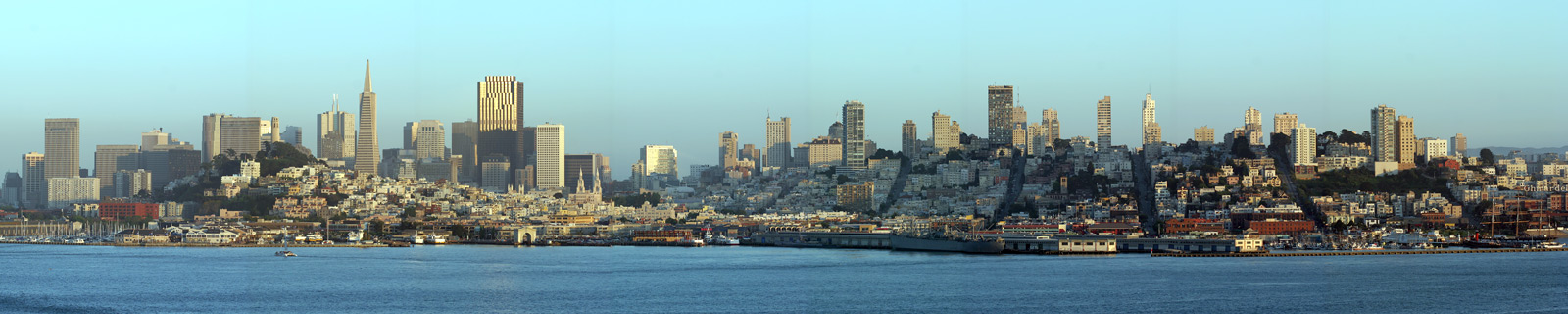 2c San Francisco Bay or the "Bay Area"
- Contains a brief paragraph how it connects to your study of humanities. 1 point The Bay area has a culture of it's own. It is very different from the Southern California culture, for instance, and we do things a little bit differently here. We are known for own wine in Napa Valley, and some specific art, with is very important in the study of humanities. Learning about differnent cultures within California gives you a greater understanding of the state itself and what to expect of culture of other states as well.
- Contains the following "analytical elements":
- Observation: What did you choose? What do you see or hear or feel or think of in the choice you made? What is the subject of the work? If you chose a 'thing' what is the work made of and what techniques (colors, lines, shapes, textures)does the creator use? Be specific in your description. If you chose a place, be specific in your description of what you see or hear. Talk to your reader as though they cannot see the item but somehow must draw a painting of what you see or hear. 1 point I chose to do the Bay Area for this topic. When I think of the Bay Area, the literal interpretation of "bay" comes to mind, and therefore so does a big body of water. When referring to "the bay" most people think of the San Francisco Bay, but it also incorporates other counties as well. San Francisco, San Jose, and Oakland are some major cities embodied in the Bay, but counties like Alameda, Contra Costa, Marin, Napa, Sonoma, Solano, Santa Clara, San Mateo are also included in this phrase. I think of things from rolling hills to tall skyskrapers, airports to famous bridges (Golden Gate) oceans to rivers. It seems as though we've got it all in the Bay area. Big cities, the beach, rivers, and lakes make it so there's a lot of things to choose from for fun. We are also very well known for a big contribution to rap music - some big artists such as Mistah Fab, Too Short, E40, and Andre Nickatina all originated from the Bay Area, and often write about it in their lyrics (evident because when I typed "Bay Area" into YouTube, all I got was these artists' music videos.)
- Interpretation: What is your choice about? Give specific examples to support this statement in 2 sentences; do so in a way that teaches us something about your choice. Make Paulo Freire proud! .75 point This choice is about a culture of it's own. We are very lucky to have the things we want and need so close to home. We have one of the best JC's around the world - Santa Rosa JC, right here in our home town. Another good university closeby is Sonoma State University, also in the top ranked colleges. Although this contributes to a lot of students not moving far from home, a good education, no matter its whereabouts, is always important.
- Judgment: What led you to your choice? What do you think or feel about this choice? Why do you feel this way? Support your thoughts with specific observations. .5 point I chose to do the Bay Area simply because after moving to San Diego for a semester, I realized just how lucky we are. After moving back home to Petaluma, I realized we really are in the perfect location, all the things I love to do (wakeboarding, going to the beach, shopping, partying) are all within a 45 min radius of my hometown. As boring as some people say Petaluma/ Sonoma County can be, I look at it in a different light since now I have experienced other places. We really are lucky to live in such a beautiful place.
- Questioning: What else would you like to know about this choice? When completing the question section, lead your audience into the question by stating a fact you do know, yet you still have the related question. This way, both your audience and you will have an educational experience. Example: I learned that John Steinbeck's Grapes of Wrath was based on his personal experience working with farm workers. I would like to know if the characters he used in that book are fictitious or are they people he met? .5 point I learned that the demographics in the county are very widespread- around 60% is white, but almost 20% is Asian, and another 20% Hispanic of any sort. I wonder what led to this population of diversity and what it is that attracts so many immigrants to this area.
5. Using your classmates work from last week, tell us one thing you learned from 1 student. Is this one thing some common experience you share or some experience that is completely different than what you experienced? Is this one thing related to our class theoretical foundation and if so, how? Is that one thing related to historical or cultural context of this country or a different one? Link that persons blog to this entry (eg cut paste that blog entry here) . .5 point
I learned from Rhianon that the largest art museum in the US is the Los Angelos County Museum of Art. This is somewhat related to my experience since I chose Hollywood for my first topic, and both are located in the Los Angelos County. This is definitely related to our class foundation - art remains to be a huge part in American culture throughout the years, and it is apparent (with such a big museum) that we are dedicated to making sure art is available to see through the publics eyes. LINK:http://rhianonlarson.blogspot.com/2009/02/2b-los-angeles-county-museum-of-art.html
OTHER LINKS:
http://en.wikipedia.org/wiki/Culture_of_California
http://en.wikipedia.org/wiki/File:SFDowntownPanoramaFromAlcatraz.jpg
http://en.wikipedia.org/wiki/Bay_Area
http://en.wikipedia.org/wiki/Napa_County,_California
http://www.youtube.com/results?search_query=The+Bay+Area&page=1
Friday, February 20, 2009
2b Exploratorium
- Contains a title using the format listed above .25 points
- Contains the sources you used with links to these sources .25 points
- Contains a brief paragraph how it connects to your study of humanities. 1 point
- Contains the following "analytical elements":
- Observation: What did you choose? What do you see or hear or feel or think of in the choice you made? What is the subject of the work? If you chose a 'thing' what is the work made of and what techniques (colors, lines, shapes, textures)does the creator use? Be specific in your description. If you chose a place, be specific in your description of what you see or hear. Talk to your reader as though they cannot see the item but somehow must draw a painting of what you see or hear. 1 point
b. Interpretation: What is your choice about? Give specific examples to support this statement in 2 sentences; do so in a way that teaches us something about your choice. Make Paulo Freire proud! .75 point
This choice is about learning. I feel that the Exploratorium teaches children in a way that most regular museums don't - and we need more museums with hands on experiences. Friere would have LOVED to see this museum and all the opportunites it presents for kids. Actually seeing the things that you learn about in school in action is a very exciting experience for a child who is trying to put the world together.
c. Judgment: What led you to your choice? What do you think or feel about this choice? Why do you feel this way? Support your thoughts with specific observations. .5 point
I chose to explore the Exploratorium simply because I remember going there as a kid, and I remember being enthralled with the sorts of things that I learned there. It makes learning fun, and that is something that a lot of teachers have trouble with when teaching children. When you are young, if something isn't interesting to you or isn't made fun, you are more likely to forget about it 5 minutes later. This makes an experience that lasts for a lifetime, and I still remember some of the things that I learned inside that great big dome.
d. Questioning: What else would you like to know about this choice? When completing the question section, lead your audience into the question by stating a fact you do know, yet you still have the related question. This way, both your audience and you will have an educational experience. Example: I learned that John Steinbeck's Grapes of Wrath was based on his personal experience working with farm workers. I would like to know if the characters he used in that book are fictitious or are they people he met? .5 point
I learned that the museum was created by a physicist by the name of Dr. Frank Oppenheimer, but I wonder if he personally was the one who created all the different stations from which you learn from. There are so many different types of activites to do, each teaching you something different, and it's amazing that one single mind could have thought up all those different things.
5. Using your classmates work from last week, tell us one thing you learned from 1 student. Is this one thing some common experience you share or some experience that is completely different than what you experienced? Is this one thing related to our class theoretical foundation and if so, how? Is that one thing related to historical or cultural context of this country or a different one? Link that persons blog to this entry (eg cut paste that blog entry here) . .5 point
I learned from Megan that the Golden Gate Bridge is 8,981 feet long. This is a very different experience as my own, since I chose Hollywood for my place to explore in assignment 2a. It is somewhat linked to the historical and cultural context of this country because the Golden Gate has a very big influence on people all around the country. People in CA and close to SF have the opportunity to see it first hand numerous times - others travel across many states to maybe get a glimpse of this miraculous, huge tower!
Megans blog: http://megan-human7.blogspot.com/2009/02/assignment-2a.html
Sources:
http://en.wikipedia.org/wiki/Culture_of_California#Museums
http://en.wikipedia.org/wiki/Exploratorium
http://www.youtube.com/watch?v=7VCmwKqGICI&NR=1
http://www.youtube.com/watch?v=T8Vvlpsx6DU&NR=1
http://en.wikipedia.org/wiki/Wave_Organ
Thursday, February 12, 2009
2a Hollywood
- Contains a title using the format listed above .25 points
- Contains the sources you used with links to these sources .25 points
- Contains a brief paragraph how it connects to your study of humanities. 1 point
- Contains the following "analytical elements":
- Observation: What did you choose? What do you see or hear or feel or think of in the choice you made? What is the subject of the work? If you chose a 'thing' what is the work made of and what techniques (colors, lines, shapes, textures)does the creator use? Be specific in your description. If you chose a place, be specific in your description of what you see or hear. Talk to your reader as though they cannot see the item but somehow must draw a painting of what you see or hear. 1 point
- Interpretation: What is your choice about? Give specific examples to support this statement in 2 sentences; do so in a way that teaches us something about your choice. Make Paulo Freire proud! .75 point
- Judgment: What led you to your choice? What do you think or feel about this choice? Why do you feel this way? Support your thoughts with specific observations. .5 point
- Questioning: What else would you like to know about this choice? When completing the question section, lead your audience into the question by stating a fact you do know, yet you still have the related question. This way, both your audience and you will have an educational experience. Example: I learned that John Steinbeck's Grapes of Wrath was based on his personal experience working with farm workers. I would like to know if the characters he used in that book are fictitious or are they people he met? .5 point
5. Using your classmates work from last week, tell us one thing you learned from 1 student. Is this one thing some common experience you share or some experience that is completely different than what you experienced? Is this one thing related to our class theoretical foundation and if so, how? Is that one thing related to historical or cultural context of this country or a different one? Link that persons blog to this entry (eg cut paste that blog entry here) . .5 point
I agree with Anthony that Friere probably wouldn't have had such an impact if he hadn't gone to Law school. Friere going to law school opened his mind about a variety of different things, and made him experience a different way of life, which is very important to the principals he teaches. Having different experiences and trying new and different things opens your mind to different cultures and ways of doing things, which is exactly what this class is about.
http://amusettihuman7.blogspot.com/2009/01/1b.html
LINKS:
http://en.wikipedia.org/wiki/Culture_of_California
http://en.wikipedia.org/wiki/Hollywood
http://en.wikipedia.org/wiki/Cinema_of_the_United_States
http://en.wikipedia.org/wiki/Hollywood_Walk_of_Fame
Subscribe to:
Posts (Atom)
